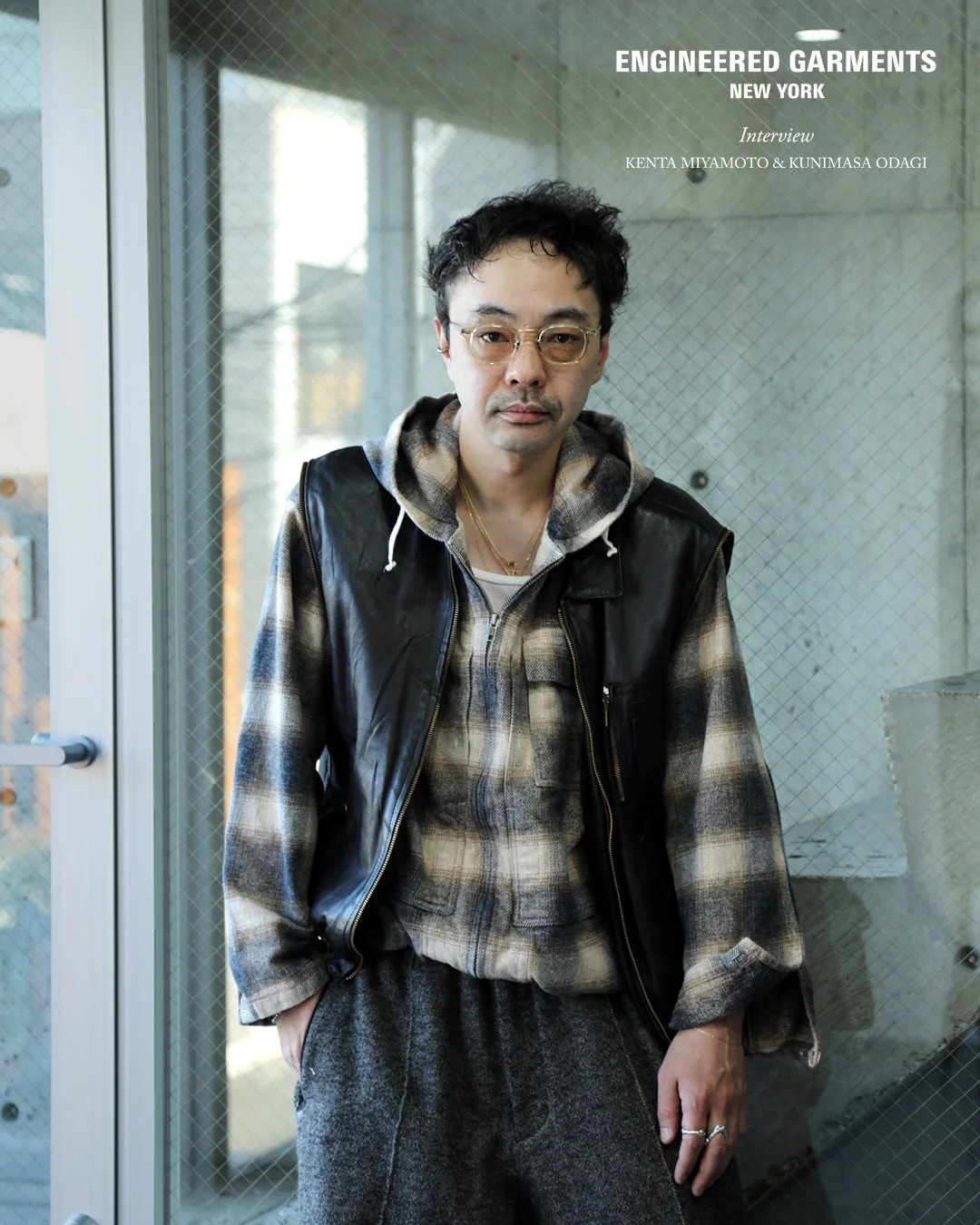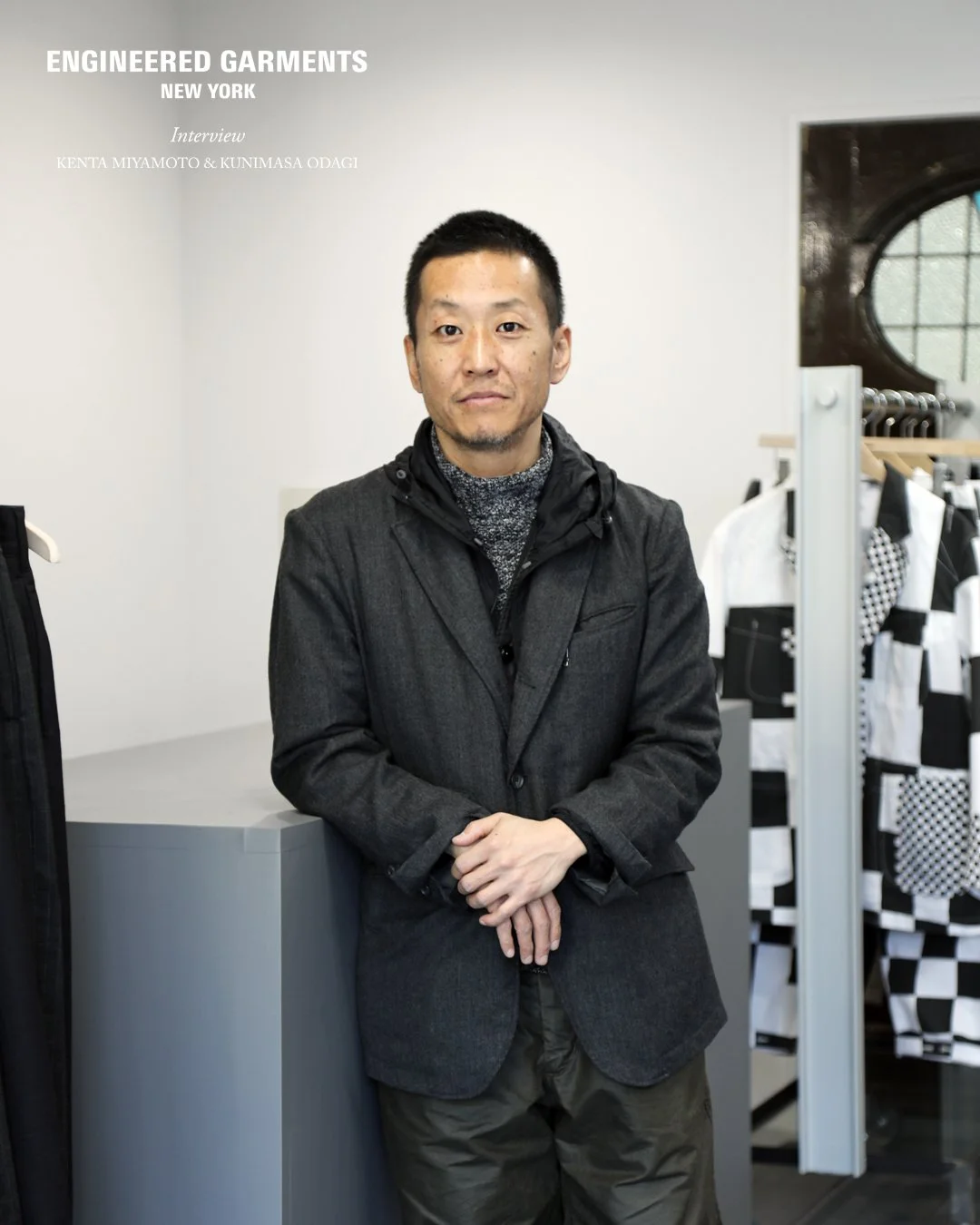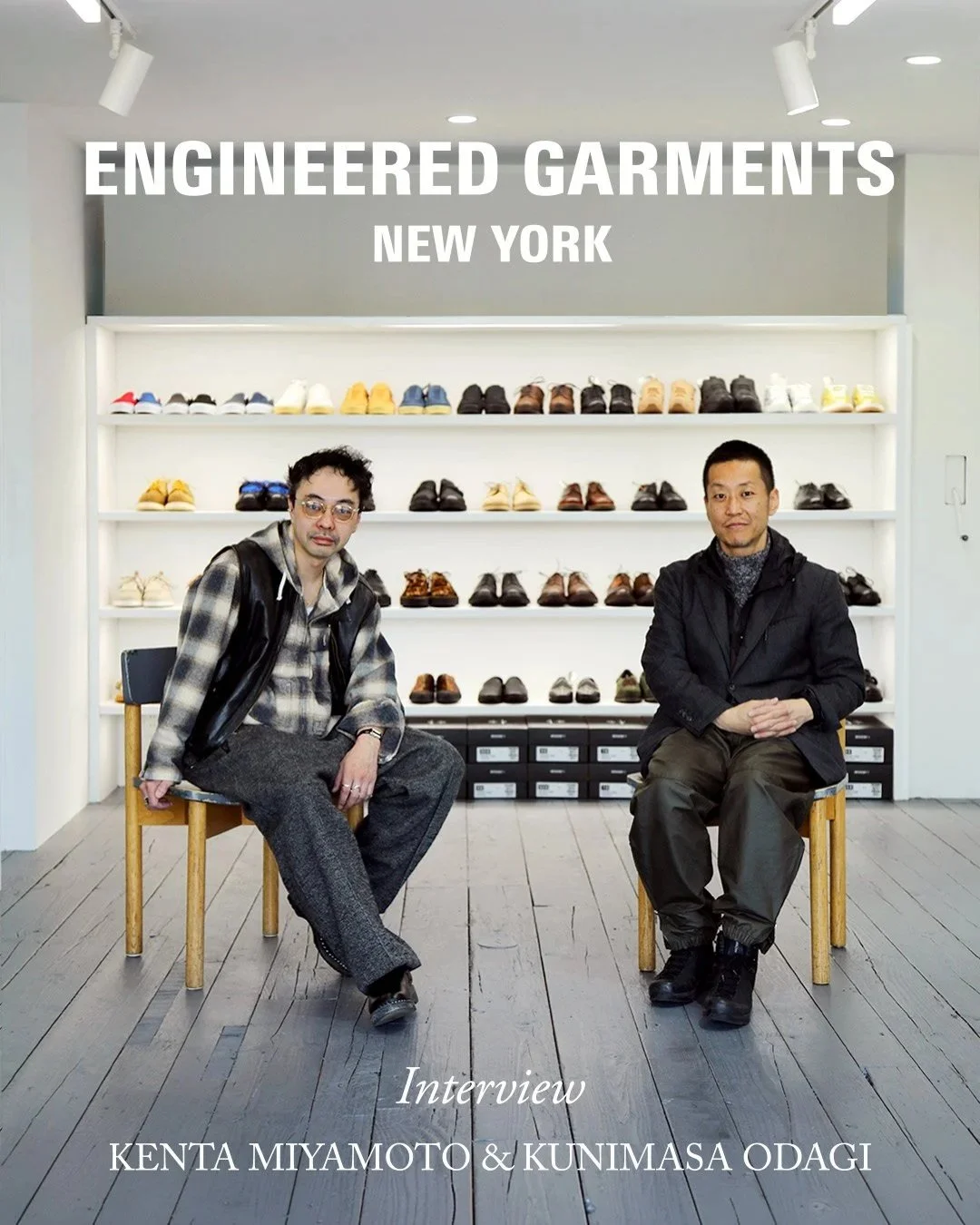
Interview with Kenta Miyamoto & Kunimasa Odagi
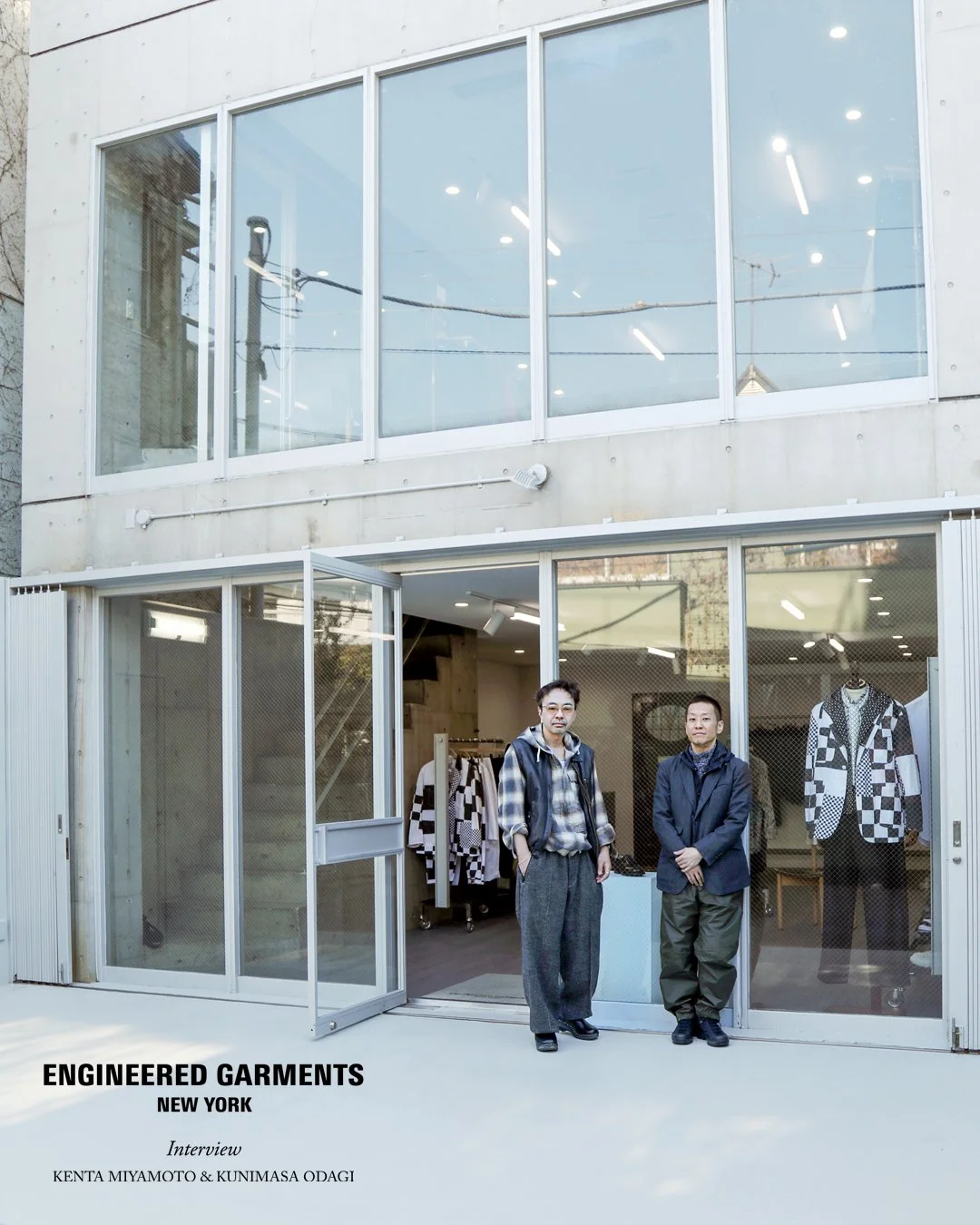
This spring, the newly reimagined ENGINEERED GARMENTS TOKYO opened its doors in Jingumae. While the building—unified in shades of gray—stands out with a striking presence, it has also quietly drawn attention as the very place where Nepenthes was founded in 1988.
In this renewed space, we spoke with Engineered Garments Director Kenta Miyamoto and Designer Kunimasa Odagi, both visiting from New York. They share their thoughts on the new store and the ideas behind the latest collection.
Q:
The new ENGINEERED GARMENTS (EG) store, unified in a gray tonal palette, offers a clean aesthetic that feels distinct from previous locations. Could you tell us about some of the key design details and what you focused on in creating the space?
Kenta:
The new store is built around an industrial aesthetic, designed to evoke the atmosphere of a downtown New York gallery. With its raw, minimal feel, we wanted the clothing to stand out almost like works of art.
Even while being in Jingumae, it carries an artistic sensibility that subtly reflects New York, which I really like. In addition to showcasing the EG collection, we hope to use the space to present related art and photography, creating a platform to share our broader worldview with the audience.
Kunimasa:
I think it turned out to be a simple yet very well-balanced space. The large windows let in plenty of natural light, giving it a real sense of openness, which is one of its key attractions.
Whether you’re already familiar with EG or discovering it for the first time, I hope people can experience the garments here firsthand, feel something, and connect with them. This space not only reflects the established world of EG, but also allows us to express new directions more fully. Moving forward, we see it as a base from which we can actively share and communicate that vision.
Q:
The EG collection is created through a two-person team of Mr. Miyamoto and Mr. Odagi. Could you tell us how each of you approaches the creative process and what roles you take on?
Kenta:
I begin by directing the overall vision of the collection, and then work closely with Odagi to refine each piece one by one. At the same time, since EG uses around 70 to 90 different fabrics each season, we are also selecting and sourcing materials in parallel.
From the early stages of sampling, I already have a fairly clear image of the seasonal visuals in mind, and we build the entire process around that vision. Because the brand involves a large number of styles, it feels like assembling a puzzle—gradually fitting each piece together over the course of two to three months to complete the bigger picture of the season.
Kunimasa:
Miyamoto usually leads the seasonal theme, materials, and overall flow of the collection, while I focus on structuring the garments—refining silhouettes, patterns, and details.
That said, we fundamentally build the collection through ongoing dialogue. In practice, we’re constantly exchanging ideas as we review samples, images, and references together, so rather than a strict division of roles, it feels more like we’re gradually shaping the collection through small, shared adjustments. Ultimately, I think that very process of dialogue is what gives the collection its unique character.
Q:
This marks my second season since taking over the brand from its founder, Daiki Suzuki. Could you please share how you feel about continuing and carrying forward the brand’s legacy?
Kenta:
Under Daiki’s direction at EG, I believe his personality was expressed to the fullest. This is something I came to strongly feel through many years of working closely with him. It’s one of the most important things I learned under his guidance, and I also believe that in the process of making things, it may look simple on the surface, but in reality it is one of the most difficult aspects to achieve.
Moving forward, I would like to continue exploring how to project and express myself within a certain framework, while also communicating that expression to the audience.
Kunimasa:
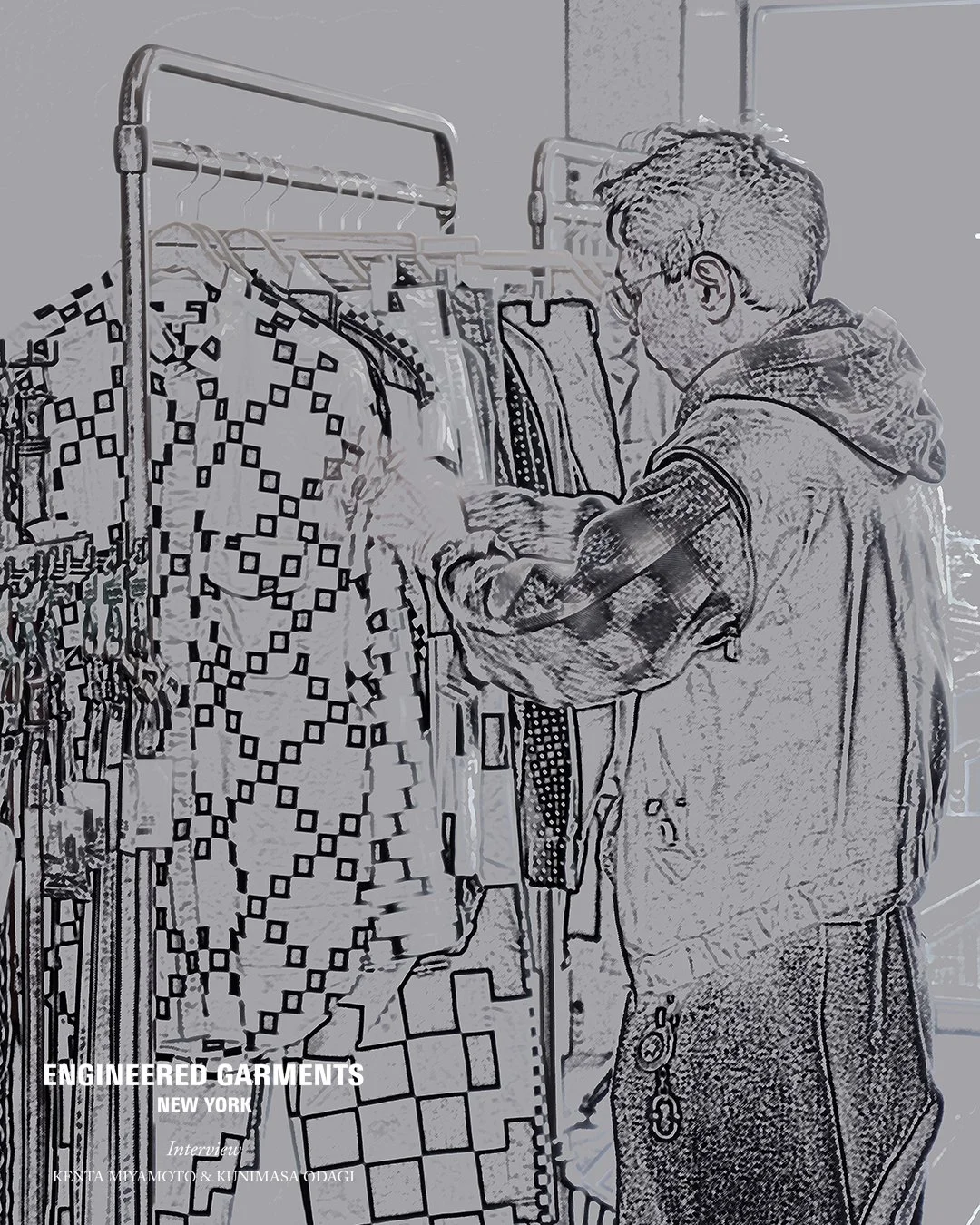
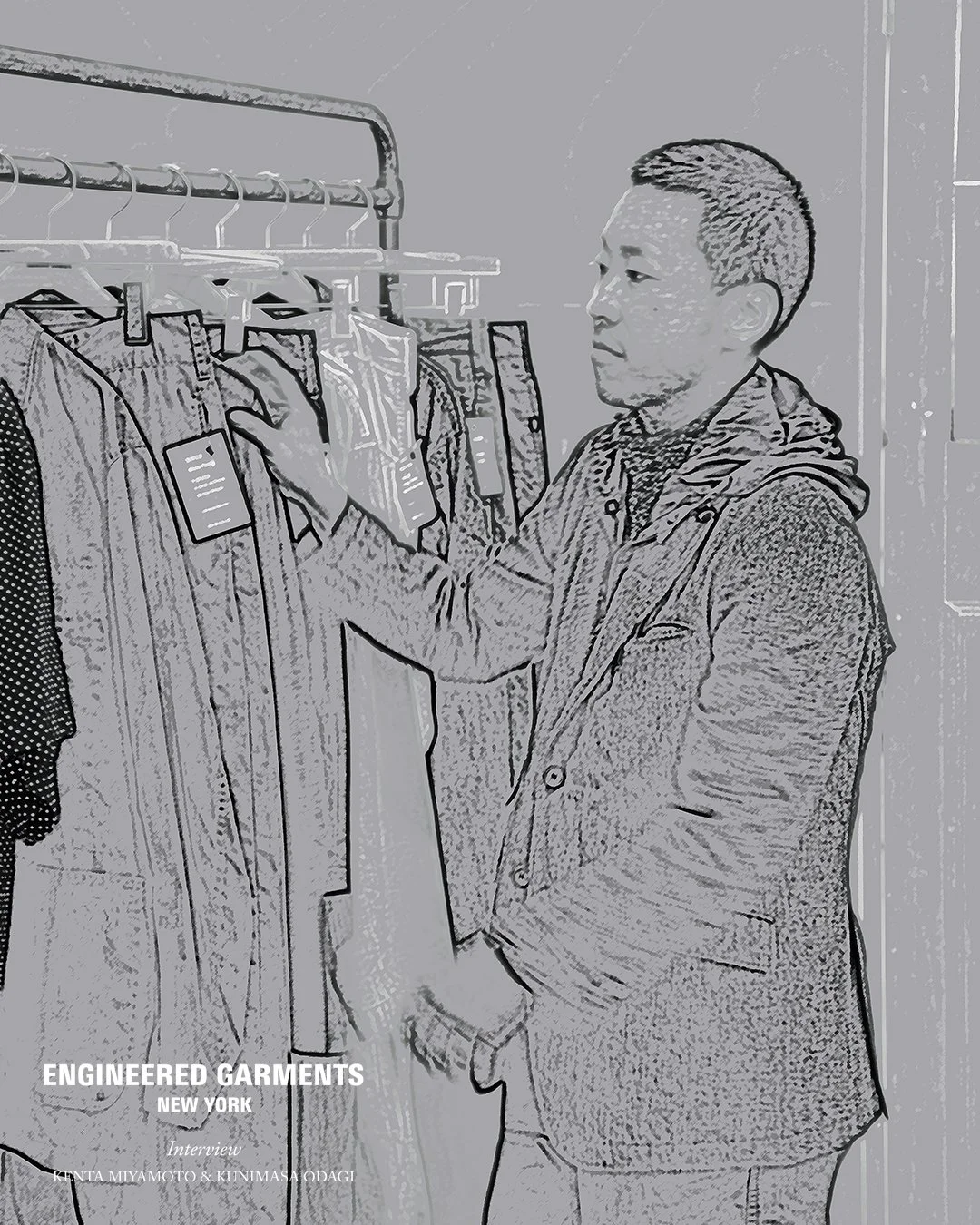
Taking over a brand certainly comes with a sense of pressure. However, EG already has a strong foundation built upon years of accumulated archives and a clear philosophy, so I also find it interesting to reinterpret that through a contemporary lens.
On a personal level, I focus on organizing the product aspects—such as silhouette and detailing—while respecting the existing context and gradually introducing updates. Rather than making abrupt changes, I believe the ideal approach is for the brand to evolve naturally, while preserving the inherent atmosphere that EG embodies.
Q:
This season’s EG featured a particularly striking use of black and white. Could you please tell us about the theme and concept behind the collection?
Kenta:
Compared to previous EG collections, I think this season takes on a somewhat unique direction. In a meeting prior to the collection’s development, the theme of “ska music” came up, and by exploring that idea further, we arrived at the concept of “black and white,” which is strongly associated with ska.
The theme of ska music had been in the back of my mind for some time—I’ve always felt it represents a culture with a distinct sense of style. Given that this is a spring/summer collection, I thought it might be interesting to reinterpret and elevate that within the context of EG. In the end, it became more expansive than I had initially imagined (laughs), and we made the bold decision to express more than half of the collection in black and white.
Through the process of creating this collection, I learned a great deal. Even when simply referring to “black and white,” there are countless variations of each within fabrics, and selecting and balancing them across the collection proved to be more challenging and time-consuming than expected. Precisely because the palette is limited to such simple tones, it was both enjoyable and highly challenging to bring depth through fabric variations and translate them into individual pieces.
Ultimately, I feel this collection reinterprets EG’s existing worldview while reconstructing it into something that presents a new perspective.
Kunimasa:
The contrast of black and white, along with a somewhat classic yet free-spirited atmosphere, is something that I feel resonates with the sensibilities EG has long valued. In that sense, rather than directly quoting ska itself, we approached the collection with an awareness of how to express its mood and rhythm through the garments.
Since the collection is based on a monochrome palette, we intentionally kept the number of colors to a minimum and focused on allowing the character and texture of the materials to stand out more clearly. Tropical wool, for example, is lightweight and breathable, making it ideal for spring and summer; while it carries a composed impression, it can also feel light depending on the silhouette. Indian fabrics have a distinctive weave and texture, creating a soft yet dimensional atmosphere even within a monochrome range. Crocheted-like materials, which we haven’t used much in EG before, add a fresh sense of openness and airiness. The custom ripstop checker fabric serves as a visual two-tone motif inspired by ska, acting as an accent throughout the collection. Linen blends offer a light feel with a soft touch, enhancing comfort suited to spring and summer. In addition, knit and jersey materials bring flexibility and a relaxed ease through their inherent softness.
During the development process, we were reminded that even within black and white, the appearance can vary greatly depending on the texture and thickness of the fabric. Working through samples and carefully adjusting subtle combinations was both fascinating and challenging. With a limited color palette, the collection is structured so that the differences and layering of materials can be fully appreciated.
Q:
Could you please share which items each of you are particularly fond of?
Kenta:
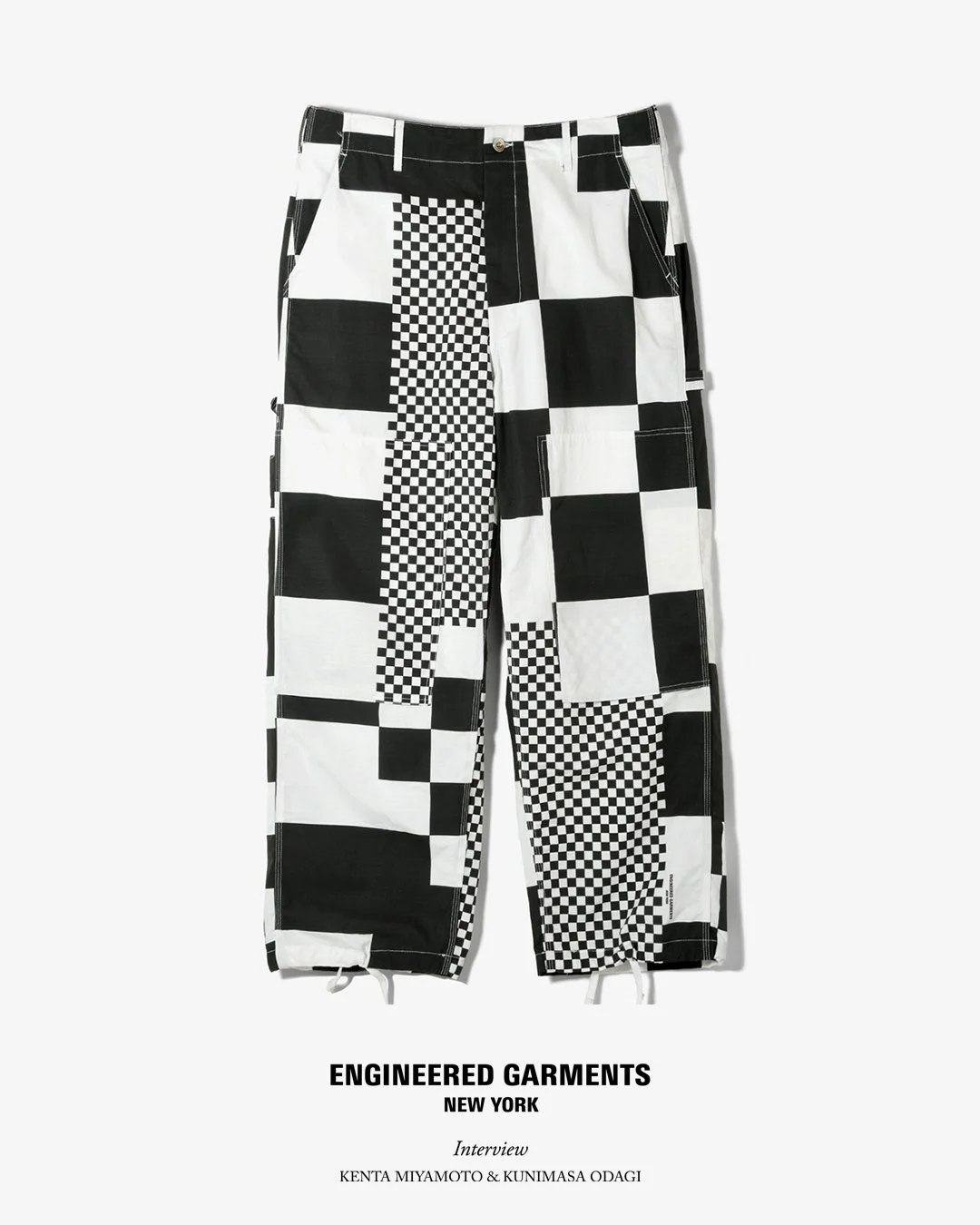
Personally, I’m particularly fond of the Painter Pants made from ripstop fabric featuring our original checker pattern. The 100% cotton ripstop is one of EG’s classic materials, and the process of printing a checker pattern onto an existing checker base is something I feel is very characteristic of EG.
Painter pants have been a staple in my own life in New York—I wear them almost every day—so this piece, in particular, carries a strong personal attachment for me.
Kunimasa:
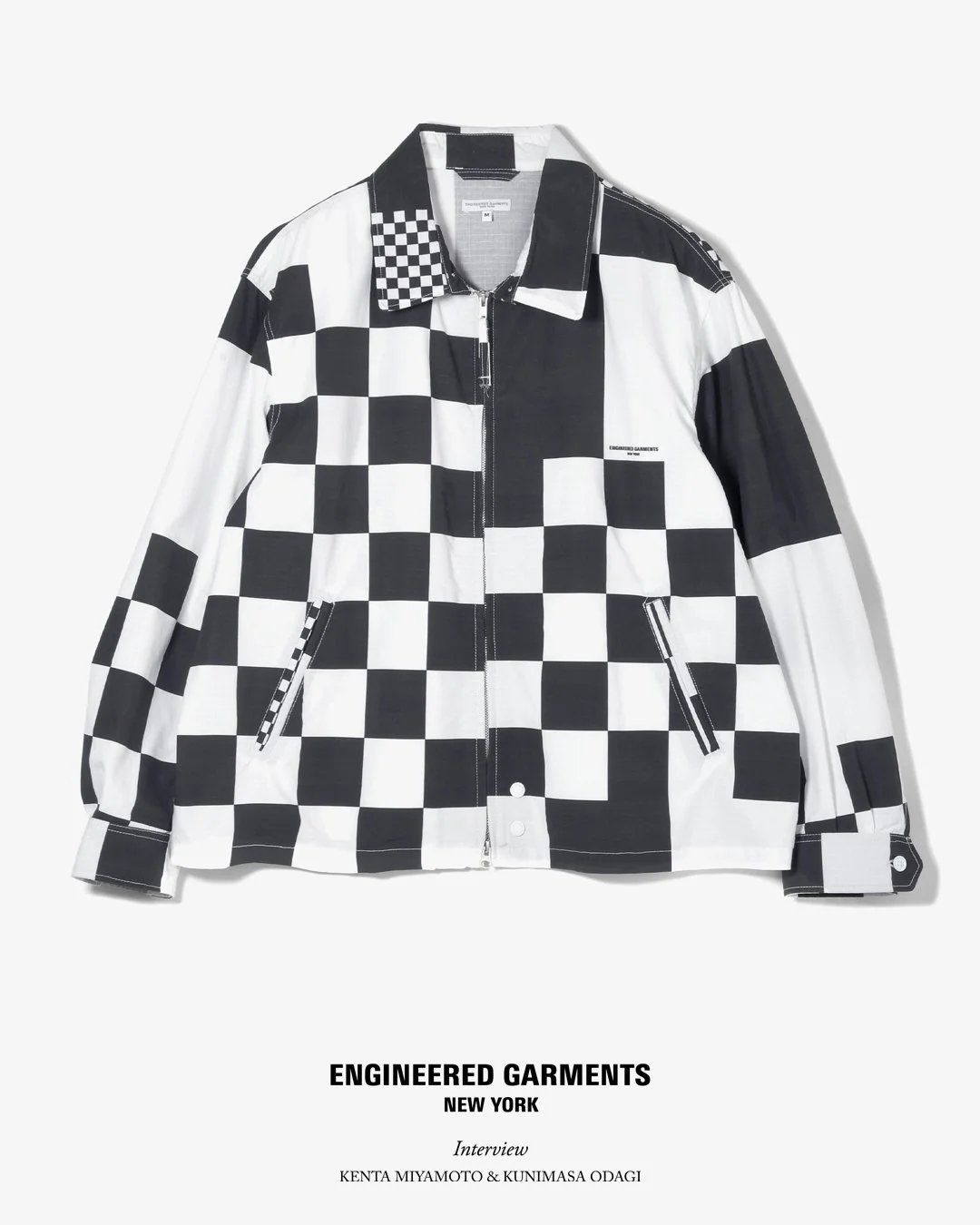
Personally, one piece I really like is the Claigton Jacket in the White/Black Checker Print. It features a shorter length, no lining, and can be fastened with both a two-way zipper and snap buttons, allowing for a variety of styling options. While simple in design, it’s a lightweight outerwear piece that’s perfect for spring and summer, and its ease of wear makes it especially appealing.
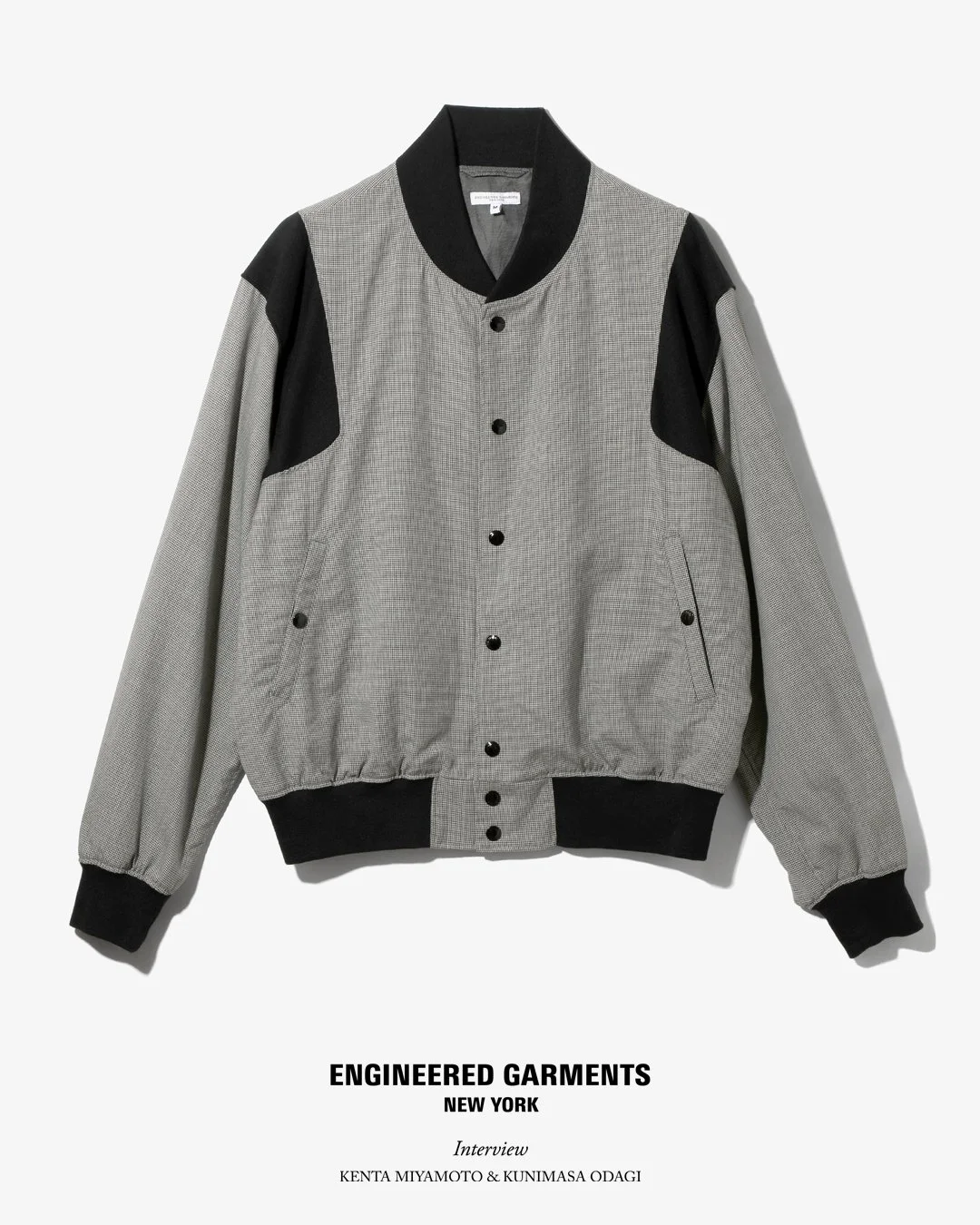
Another piece I’m fond of is the Referee Jacket in Grey Micro Houndstooth Tropical Wool. Although it’s a new outerwear style this season, it carries a casual sensibility that aligns with the overall theme. It’s easy to wear, while details such as the rib panels at the shoulders add a subtle accent. With its bomber/referee-inspired design, it strikes a good balance between functionality and style, making it an outerwear piece that fits naturally into everyday wear.
Q:
Could you please share, as a final question, if there is anything each of you is currently interested in or particularly immersed in?
Kenta:
Lately, one of the things I enjoy most in my daily life is visiting bookstores. What I find fascinating about New York is that you can experience underground trends within the scale of a relatively small city. While it feels like there are fewer interesting clothing stores these days, independent and creatively driven spaces—such as restaurants and galleries—are still emerging, and I often draw inspiration and stimulation from places like these.
Among them, I’m particularly interested in the way art books are being curated and presented. Each selection reflects a distinct curatorial perspective, and there’s a kind of richness unique to books that you can’t really experience in the age of social media. Personally, the types of books I choose vary widely, and I try to approach each encounter without preconceptions, selecting what resonates with me in the moment.
Kunimasa:
Recently, there haven’t been any major changes; I’ve simply been enjoying the small moments in everyday life and the time spent engaging with my personal interests. As I have for some time, I still enjoy visiting vintage clothing stores and thrift shops, where the items and details I come across by chance often lead to unexpected inspiration. Those moments remain an important part of my routine.
I’m also drawn to outdoor-related items, and rather than focusing on specific brands, I enjoy actually wearing and using them as a way to test and experience them firsthand. Beyond their design appeal, I find the process of considering how functionality integrates into everyday life to be particularly interesting.
Football (soccer) is another important part of my life that I’ve been continuing for a long time, and it’s something I’m still very engaged with. The rhythm and sense of awareness gained through physical movement—the ability to make split-second decisions and maintain balance within the flow of the game—feels closely connected to my approach to design. Even things I notice while walking through the city can become small hints of inspiration. These everyday observations, combined with the physical sensibilities I gain from playing football, come together and ultimately lead to ideas for the next collection.